Crafting a Monster Truck Pop Up Card: A Practical Guide to Interactive Paper Engineering
Creating handmade greeting cards has evolved from simple folding and gluing into a sophisticated craft that blends graphic design with structural engineering. Among the various styles available, the Monster Truck Pop Up Card stands out as a particularly engaging project for crafters who want to deliver more than just a sentiment. This specific type of card combines bold visual aesthetics with mechanical movement, resulting in a three-dimensional surprise that captures attention immediately upon opening. For adults aged 20 to 50 who are exploring creative alternatives to store-bought greetings, understanding the mechanics, material requirements, and comparative advantages of this project is essential before committing time and resources.
Understanding the Mechanics and Design Appeal
The core appeal of a Monster Truck Pop Up Card lies in its interactive nature. Unlike flat cards where the design is static, this format utilizes layered paper structures that expand when the card is opened. The specific design referenced here, available through templates like those from Bella Carta Design, features a large, colorful truck that rises from the card base. The front typically carries a thematic message, such as “Have a Monster of a,” setting the tone before the recipient even sees the interior mechanism.
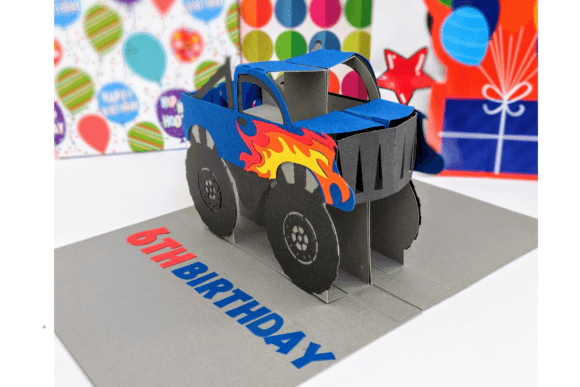
When the card is opened, a blue monster truck adorned with brightly colored flames pops up, creating a dynamic visual experience. This effect is achieved through precise cutting and folding techniques that allow flat cardstock to transform into a 3D object. The inclusion of customizable elements, such as numbers 0 through 9, allows the creator to tailor the card for any birthday year, adding a layer of personalization that mass-produced cards rarely offer. Furthermore, the project often includes a themed A7 envelope with a flaming truck grill detail, ensuring that the cohesive design extends to the packaging itself.
Comparing Digital Templates to Traditional Hand-Cutting
When evaluating how to create a complex pop-up design, crafters generally face a choice between using digital cutting machines and traditional hand-cutting methods. The Monster Truck Pop Up Card template is designed primarily for use with electronic cutting machines such as Cricut or Silhouette devices. These tools use SVG (Scalable Vector Graphics) files to cut intricate shapes with high precision.
The primary advantage of using a cutting machine for this project is accuracy. Pop-up cards rely on exact measurements; if a tab is too short or a fold line is misplaced, the mechanism may fail to pop up correctly or could tear upon opening. Digital cutters ensure that every component, from the tiny flame details to the structural supports of the truck, is cut to the exact specifications required for assembly. Additionally, the time savings are significant. Cutting dozens of small pieces by hand with scissors or a craft knife can take hours, whereas a machine can complete the task in minutes.
However, there are tradeoffs. Using a digital template requires access to specific hardware and software, such as Silhouette Studio or Cricut Design Space. For individuals who do not own these machines, the barrier to entry is higher. In such cases, one might consider simpler pop-up designs that are less dependent on micro-precision or opt for pre-cut kits, though these often lack the customization flexibility of a digital SVG file. If you already possess a cutting machine, leveraging an SVG template is arguably the most efficient route for achieving professional-grade results.
Material Selection and Structural Integrity
The success of any pop-up card depends heavily on the materials used. For the Monster Truck Pop Up Card, the template specifies the use of cardstock in various weights and colors. Typically, light grey, dark grey, blue, yellow, orange, and red cardstocks are required. The choice of paper weight is critical. Standard printer paper is too flimsy to support the structural demands of a pop-up mechanism, while overly thick cardboard may be difficult to fold cleanly.
Most designers recommend using 65lb to 80lb cardstock for the main components. This weight provides enough rigidity to hold the 3D shape without being so stiff that it resists folding. The template calls for specific sheet sizes, such as 12x12 inches for the grey tones and 8.5x11 inches for the brighter accent colors. It is important to note that color consistency matters for the final aesthetic. Using high-quality, acid-free cardstock ensures that the vibrant blues and fiery oranges remain vivid over time, preventing fading if the card is kept as a keepsake.
Adhesion is another crucial factor. The instructions emphasize the need for strong paper glue. Because pop-up cards undergo stress every time they are opened and closed, weak adhesives can lead to detachment of key structural elements. Liquid tack glue or double-sided tape designed for heavy paper crafts is often preferred over standard glue sticks, which may dry out or lose bond strength. Optional adhesive foam can be used to add depth to certain layers, enhancing the 3D effect, but it should be used sparingly to avoid adding excessive bulk that might prevent the card from closing flat.
Evaluating the Time Investment and Skill Level
Prospective makers should realistically assess the time and skill required for this project. While the cutting process is automated, the assembly phase is manual and requires patience. The template includes PDF instructions that guide users step-by-step, which is invaluable for beginners. However, assembling a multi-layered pop-up card involves aligning small tabs, folding along precise score lines, and ensuring that moving parts do not interfere with each other.
For someone new to paper engineering, this project may present a moderate challenge. The complexity is higher than a standard folded card but lower than advanced architectural pop-ups. The benefit of following a tested template like the one from Bella Carta Design is that the engineering problems have already been solved. Users do not need to calculate angles or stress points; they simply need to follow the assembly sequence. This makes the Monster Truck Pop Up Card an excellent intermediate project for those looking to expand their crafting skills without facing overwhelming frustration.
When This Project Is the Right Choice
Choosing to make a Monster Truck Pop Up Card is ideal in several scenarios. First, it is suitable for recipients who appreciate novelty and tactile experiences. Children and adults alike tend to retain interactive cards longer than flat ones because they serve as small toys or display pieces. Second, it is a strong option for those who value personalization. The ability to customize the age with included number digits allows for a tailored message that feels thoughtful and specific.
Additionally, this project is well-suited for crafters who already own cutting machines and have leftover cardstock. Utilizing existing supplies reduces the marginal cost of the project, making it a budget-friendly alternative to buying premium handmade cards, which can cost significantly more. The final product, with its 5-inch by 7-inch closed size and 4-inch by 5.5-inch pop-up feature, fits standard A7 envelopes, ensuring that mailing costs remain reasonable despite the added dimension.
Limitations and Alternative Considerations
Despite its advantages, the Monster Truck Pop Up Card is not without limitations. The primary constraint is durability. While sturdy, paper mechanisms can wear out if handled roughly. If the recipient is very young or likely to treat the card as a toy rather than a keepsake, the pop-up elements may eventually detach. In such cases, a flat card with a printed image of a monster truck might be more practical.
Furthermore, the thematic specificity limits its use. This design is clearly targeted toward birthdays, particularly for enthusiasts of trucks or action themes. It may not be appropriate for formal occasions or recipients who prefer minimalist aesthetics. Crafters should also consider the environmental impact of using multiple sheets of cardstock and adhesives, which are not always recyclable. For those prioritizing sustainability, using recycled cardstock or minimizing glue usage could mitigate some concerns.
In conclusion, the Monster Truck Pop Up Card represents a compelling intersection of creativity and technical craft. It offers a distinct alternative to conventional greetings by providing an interactive, personalized experience. By understanding the material requirements, leveraging digital cutting tools for precision, and acknowledging the assembly effort involved, crafters can make an informed decision about whether this project aligns with their skills and the recipient’s preferences. For those willing to invest the time, the result is a memorable piece of paper art that stands out in a world of digital communication and mass-produced stationery.