Mastering the Kids Book Mock Up: A Guide for Designers and Marketers
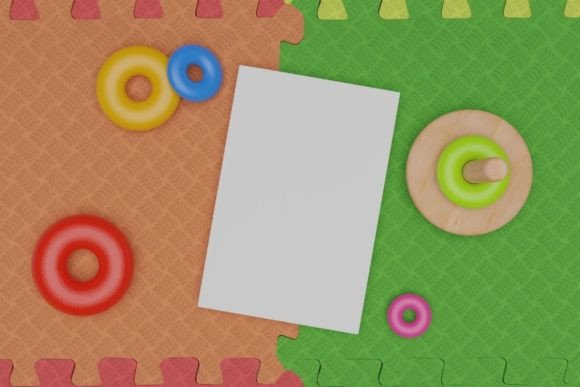
In the competitive world of children’s publishing, the visual presentation of a book is often just as critical as the story inside. Before a parent or educator commits to a purchase, they need to visualize how the final product will look on a shelf or in a child’s hands. This is where a high-quality Kids Book Mock Up becomes an indispensable tool. For artists, graphic designers, and marketing professionals, these digital assets bridge the gap between a flat design file and a tangible, desirable product. By utilizing a professional 3D render, creators can showcase their work with realism and precision, significantly enhancing the perceived value of their project.
Understanding the Value of Professional Presentation
A Kids Book Mock Up is not merely a decorative element; it is a strategic communication tool. When you are designing cover art, interior layouts, or promotional materials, working with two-dimensional files can make it difficult to judge scale, proportion, and overall aesthetic appeal. A mockup solves this by placing your design onto a realistic three-dimensional model. This allows stakeholders, clients, and potential customers to see exactly how the colors, typography, and imagery interact in a real-world context.
The specific mockup referenced here offers distinct advantages due to its technical specifications. With a resolution of 10000 x 8000 pixels at 300 DPI, it provides exceptional clarity. This high resolution ensures that even when zoomed in for detailed inspection or printed for large-format displays, the image remains crisp and free of pixelation. For professionals who need to deliver top-tier visuals, having access to such high-fidelity resources is non-negotiable.
Addressing Common Challenges in Book Design
Designers and marketers often face several hurdles when presenting their work. One major challenge is the disconnect between digital designs and physical reality. Colors may look vibrant on a screen but dull in print, or text may appear legible in a layout program but become lost when viewed from a distance. Another common issue is the difficulty in conveying the "feel" of a book through a flat JPEG or PNG file. Without context, a cover design can feel abstract and uninviting.
Furthermore, creating custom photography for every book project is time-consuming and expensive. Hiring photographers, sourcing props, arranging lighting, and editing photos can drain resources that might be better spent on the design itself. This is where a pre-rendered 3D Kids Book Mock Up offers a practical solution. It eliminates the logistical nightmares of physical photoshoots while providing a consistent, professional look that can be replicated across multiple projects.
How a High-Resolution Mockup Enhances Your Workflow
Using a Kids Book Mock Up streamlines the design review process. Because the format includes both JPEG and PNG files, users have flexibility in how they integrate the asset into their workflow. The PNG format, with its transparency support, allows designers to layer their cover art seamlessly over the mockup without worrying about background clashes. Meanwhile, the high-resolution JPEG is perfect for quick previews, social media posts, or client presentations where file size might be a concern, although the primary strength here lies in the massive pixel dimensions available for detailed work.
The ease of use is another significant benefit. Since this is a 3D render, the lighting, shadows, and perspective are already perfectly calculated. Designers do not need advanced knowledge of 3D modeling software to achieve a photorealistic result. They simply need to place their design onto the provided template. This accessibility means that even freelancers or small teams without extensive technical resources can produce agency-quality visuals.
Practical Applications for Different Professionals
The utility of a Kids Book Mock Up extends beyond just cover design. Different professionals can leverage this tool in various ways to meet their specific goals.
- Graphic Designers: Use the mockup to test different color palettes and typography choices. Seeing the design in a 3D space helps identify balance issues that might not be apparent in a 2D view.
- Authors and Self-Publishers: For independent authors, professional presentation is key to standing out in online marketplaces. A high-quality mockup can be used for Amazon listings, social media promotions, and press kits, giving self-published works the same polished look as traditionally published books.
- Marketers and Advertisers: Create compelling ad creatives for social media campaigns. The realistic nature of the 3D render captures attention more effectively than flat graphics, leading to higher engagement rates.
- Educators and Librarians: Use mockups to create visually appealing reading lists, bulletin boards, or digital newsletters that encourage children to pick up new books.
Maximizing Impact with Semantic Considerations
When implementing a Kids Book Mock Up, it is important to consider the target audience. Children’s books often feature bright colors, playful fonts, and engaging illustrations. The mockup should complement these elements rather than overpower them. The neutral, professional nature of a standard 3D render ensures that the focus remains on the artwork. However, designers should ensure that the lighting in the mockup aligns with the mood of the book. For example, a bedtime story might benefit from softer, warmer tones, while an adventure book might look better with brighter, high-contrast lighting.
Additionally, the aspect ratio and dimensions of the mockup allow for versatile cropping. With a size of 10000 x 8000 pixels, you can extract square crops for Instagram, vertical crops for Pinterest, or wide banners for website headers without losing quality. This versatility makes the single asset a multi-purpose tool in your digital arsenal.
Recommendations for Best Results
To get the most out of your Kids Book Mock Up, follow these best practices:
- Maintain Consistency: If you are showcasing a series of books, use the same mockup angle and lighting for all covers. This creates a cohesive brand identity and makes the series look professional and unified.
- Check Legibility: Use the high resolution to zoom in and ensure that all text, especially titles and author names, is clearly readable. Adjust font sizes if necessary before finalizing the design.
- Optimize for Web: While the source file is huge, remember to export web-ready versions for online use. Compress images appropriately to ensure fast loading times on websites and social platforms without sacrificing visible quality.
- Contextualize the Design: Consider adding subtle background elements or textures that relate to the book’s theme, but keep them understated so they do not distract from the book itself.
Conclusion
In summary, a Kids Book Mock Up is a vital resource for anyone involved in the creation and promotion of children’s literature. By providing a realistic, high-resolution 3D representation of the final product, it helps designers refine their work, assists marketers in creating compelling visuals, and enables authors to present their books professionally. The combination of ease of use, high fidelity, and flexible formats makes this tool an essential part of the modern design workflow. Whether you are preparing for a launch, updating your portfolio, or creating marketing materials, investing time in mastering the use of these mockups will yield significant returns in terms of professionalism and audience engagement.